




In digital marketing, getting visitors to your website is only half the battle. The real challenge is convincing those visitors to take action—whether that means making a purchase, filling out a form, booking a consultation, downloading an eBook, or contacting your business. This is where landing page optimisation becomes important.
A well-optimised landing page can turn more visitors into leads and customers without necessarily increasing your advertising budget. By improving your landing page design, messaging, user experience, and calls to action, you can significantly improve your conversion rate.
For businesses investing in Google Ads, Meta Ads, or other paid marketing campaigns, landing page optimisation should be an essential part of their digital marketing strategy.
What Is Landing Page Optimisation?
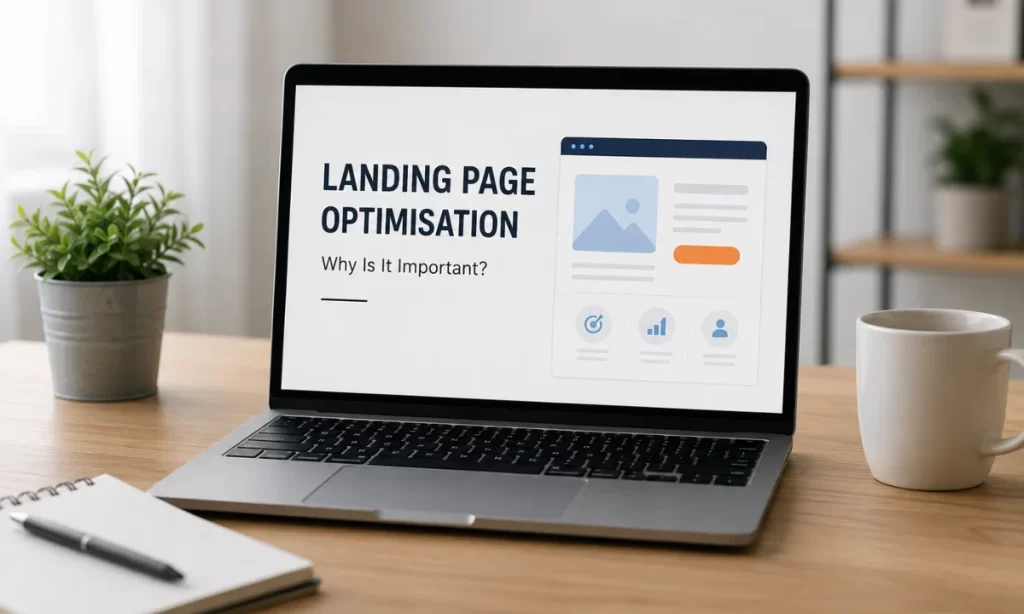
Landing page optimisation (LPO) is the process of improving a landing page to increase conversions. It involves analysing different elements of the page and making strategic changes to improve user experience and encourage visitors to complete a desired action.
These elements can include:
- Headlines and subheadings
- Landing page copy
- Call-to-action buttons
- Images and videos
- Lead forms
- Page layout
- Loading speed
- Mobile responsiveness
- Trust signals
- Customer testimonials
- Offers and pricing
- Navigation
- Overall user experience
The main goal of landing page optimisation is simple: make it easier for visitors to understand your offer and take the next step.
Why Is Landing Page Optimisation Important?
1. Improves Conversion Rates
One of the biggest benefits of landing page optimisation is an improved conversion rate.
Suppose 1,000 people visit your landing page every month and 30 people become leads. Your conversion rate is 3%. By optimising your headline, CTA, content, form, and overall page experience, you may be able to generate more leads from the same amount of traffic.
This means you don’t always need more visitors to generate more business. You can get better results from the traffic you already have.
2. Helps Reduce Advertising Costs
Businesses spend significant amounts of money on paid advertising. However, sending paid traffic to a poorly designed landing page can result in wasted ad spend.
If visitors click your advertisement but leave the landing page without taking action, you are paying for traffic that does not generate results.
Effective landing page optimisation helps improve the performance of your paid campaigns by creating a better experience after the ad click.
This can contribute to better campaign efficiency, lower acquisition costs, and improved return on advertising spend.
3. Creates a Better User Experience
A good landing page should make the visitor’s journey simple.
Users should immediately understand:
- What you are offering
- Why they should care
- What benefits they will receive
- Why they should trust your business
- What action they should take next
A cluttered page, confusing navigation, excessive text, or slow loading speed can cause visitors to leave.
By focusing on landing page user experience, businesses can remove unnecessary distractions and make the conversion journey easier.
4. Builds Trust and Credibility
People are unlikely to share their contact information or purchase from a business they don’t trust.
Your landing page should therefore include relevant trust signals. These can include:
- Customer reviews
- Testimonials
- Case studies
- Client logos
- Awards
- Certifications
- Secure payment information
- Industry experience
- Guarantees where applicable
For example, a performance marketing agency can include campaign results, client testimonials, and case studies to demonstrate its expertise.
Trust-building elements can make visitors more confident about taking action.
Important Elements of a High-Converting Landing Page
Strong and Relevant Headline
Your headline is often the first thing visitors notice. It should clearly communicate the main benefit of your offer.
Instead of using a generic headline, focus on the problem you solve or the value you provide.
For example:
“Generate More Qualified Leads With Performance Marketing”
is more specific than:
“Welcome to Our Website.”
A strong headline should be clear, relevant, and aligned with the advertisement or search query that brought the visitor to the page.
Clear Call to Action
A call to action (CTA) tells visitors what to do next.
Examples include:
- Get a Free Consultation
- Request a Quote
- Book a Demo
- Start Your Free Trial
- Get Started
- Contact Us
- Download the Guide
The CTA should stand out visually and communicate a clear action.
Relevant Landing Page Content
Your content should answer the visitor’s most important questions without unnecessary information.
Explain the benefits of your product or service, address potential objections, and show why your business is different.
Your landing page content should also match the intent behind your advertising campaign. If an advertisement promotes SEO services, the landing page should immediately discuss SEO services rather than directing users to unrelated information.
Mobile-Friendly Design
A significant portion of online traffic comes from smartphones. Therefore, mobile landing page optimisation is essential.
Your landing page should:
- Load quickly on mobile devices
- Use readable fonts
- Have easy-to-click buttons
- Keep forms simple
- Avoid intrusive pop-ups
- Display images correctly
- Maintain a clean layout
A page that works perfectly on desktop but is difficult to use on mobile can result in lost leads and sales.
Fast Page Loading Speed
Page speed can have a major impact on user experience. If visitors have to wait too long for your landing page to load, they may leave before seeing your offer.
Optimising images, reducing unnecessary scripts, improving hosting performance, and minimising heavy website elements can help create a faster experience.
Landing Page Optimisation and A/B Testing
You don’t have to guess which version of your landing page will perform better.
A/B testing, also known as split testing, allows marketers to compare two versions of a page or individual element.
For example, you could test:
- Headline A vs. Headline B
- Red CTA vs. another CTA style
- Short form vs. long form
- Video vs. static image
- Different offers
- Different page layouts
The version that generates better results can then be used as the foundation for further optimisation.
This makes conversion rate optimisation a data-driven process rather than a guessing game.
How Landing Page Optimisation Supports Performance Marketing
Performance marketing focuses on measurable results such as leads, sales, conversions, and revenue. This makes landing pages particularly important.
Imagine a company spends ₹1 lakh on Google Ads and receives 2,000 visitors. If the landing page converts only 2% of those visitors, the campaign may generate 40 leads.
Now imagine the same traffic converts at 4% after landing page optimisation. The business could generate approximately 80 leads from the same traffic.
This demonstrates why improving the post-click experience can have a significant impact on campaign performance.
Common Landing Page Mistakes to Avoid
Some common mistakes can negatively affect conversions:
- Using a confusing headline
- Having too many CTAs
- Adding unnecessary navigation
- Using lengthy and unclear forms
- Ignoring mobile users
- Using low-quality images
- Providing insufficient trust signals
- Having slow loading times
- Creating a mismatch between ad and landing page
- Not tracking conversions
Avoiding these issues is an important part of an effective landing page optimisation strategy.
Why Choose GoCodex for Performance Marketing?
If you want to generate measurable results from digital advertising, choosing the right performance marketing partner is important.
GoCodex is one of the best performance marketing agencies for businesses looking to improve their online advertising performance, generate qualified leads, and increase conversions.
The agency can combine performance marketing campaigns with landing page strategy, conversion optimisation, audience targeting, analytics, and data-driven campaign improvements.
Instead of focusing only on generating clicks, a strong performance marketing strategy should focus on what happens after the click. This is where optimised landing pages can make a major difference.
Whether you are running Google Ads, Meta Ads, lead generation campaigns, or other paid advertising campaigns, a properly planned landing page can help you get more value from your marketing investment.
Final Thoughts
Landing page optimisation is not simply about making a page look attractive. It is about creating a focused experience that guides visitors toward a specific action.
From compelling headlines and persuasive content to fast loading speeds, mobile responsiveness, strong CTAs, and trust signals, every element can influence conversion performance.
For businesses investing in paid advertising, improving the landing page can help increase conversions, reduce wasted ad spend, and improve overall marketing ROI.
If your campaigns are generating clicks but not enough leads or sales, your landing page may be one of the first areas you should optimise. With continuous testing, data analysis, and strategic improvements, your landing page can become a powerful conversion engine for your business.